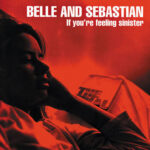
 Some albums kick the door down. Others politely knock, wait a few minutes, and then quietly let themselves in when you aren’t paying attention.
Belle and Sebastian’s If You’re Feeling Sinister belongs firmly in the second category.
Released in 1996, it has never sold tens of millions of copies. It never dominated radio. It didn’t produce arena-sized singalongs or become the soundtrack to every sporting event known to humanity. You won’t hear it blasting from pickup trucks at stoplights or from the speakers at your local gym, where someone is attempting to deadlift a small moon.
Instead, it quietly became one of the most beloved albums among people who discovered it.
That’s exactly why it’s so easy to overlook.
While Britpop giants like Oasis and Blur were busy trying to out-volume each other, Belle and Sebastian were sitting in the corner with acoustic guitars, a stack of books, and enough bittersweet observations to fill an entire library. Their music wasn’t trying to conquer the world. It was trying to understand it.
Nearly three decades later, If You’re Feeling Sinister feels less like an overlooked indie record and more like one of the finest singer-songwriter albums ever recorded—one that somehow still doesn’t receive the recognition it deserves outside devoted music circles.
Timing Is Everything
The mid-1990s weren’t exactly begging for delicate chamber pop.
Rock music was still riding the aftershocks of grunge. Britpop was at its commercial peak. Electronic music was exploding. Hip-hop was entering one of its greatest eras.
Then came Belle and Sebastian.
There were no swaggering rock-star poses.
No oversized guitar solos.
No attempts to become the loudest band in the room.
Instead, Stuart Murdoch wrote songs that felt like beautifully written short stories populated by lonely students, dreamers, churchgoers, romantics, and people trying to figure out where exactly they fit in the world.
It wasn’t fashionable.
It wasn’t flashy.
And because of that, it slipped under the mainstream radar.
Sometimes being different is rewarded immediately. Other times it takes decades for people to realize what they missed.
Stuart Murdoch Wrote Characters, Not Just Songs
One reason If You’re Feeling Sinister has aged so remarkably well is that Murdoch rarely writes in clichés.
Many songwriters create emotions.
Murdoch creates people.
His characters feel startlingly real—not because every detail is explained, but because every small observation feels authentic.
The album is filled with awkward conversations, spiritual questions, missed opportunities, private victories, insecurities, and tiny moments that somehow become monumental.
It’s almost like reading Raymond Carver stories set to gentle pop melodies.
Rather than telling listeners how to feel, Murdoch invites them into somebody else’s life for four or five minutes.
That’s a surprisingly rare talent.
Quiet Doesn’t Mean Small
One of the biggest misconceptions about Belle and Sebastian is that their music is “soft.”
Sure, the arrangements are gentle.
The vocals rarely become theatrical.
Nobody is trying to melt faces with guitar distortion.
But emotional intensity isn’t measured in decibels.
If You’re Feeling Sinister carries enormous emotional weight precisely because it refuses to shout.
Songs like “The Stars of Track and Field” unfold patiently.
“The State I Am In” feels almost conversational.
“Seeing Other People” disguises heartbreak beneath bright melodies.
The title track wrestles with faith, depression, identity, and hope without ever becoming melodramatic.
It’s confident enough to trust the listener.
Ironically, that confidence often gets mistaken for fragility.
Every Song Feels Necessary
Many classic albums contain one or two obvious filler tracks.
This isn’t one of them.
That’s part of what makes If You’re Feeling Sinister so remarkable.
Every song contributes something unique.
There isn’t an obvious moment where the quality dips or where the listener feels tempted to skip ahead.
The pacing is nearly perfect.
The quieter songs create space.
The brighter songs add momentum.
The emotional highs and lows feel carefully arranged rather than accidental.
It’s an album that rewards listening from beginning to end—a concept that feels increasingly valuable in the age of playlists.
Simplicity Is Harder Than It Looks
One of Belle and Sebastian’s greatest strengths is making sophisticated songwriting sound effortless.
The melodies often feel inevitable, as though they couldn’t possibly have been written any other way.
But that’s deceptive.
Writing simple music that remains endlessly interesting is extraordinarily difficult.
The acoustic guitars.
The subtle strings.
The delicate piano.
The understated brass.
Nothing feels excessive.
Every instrument enters at precisely the right moment and leaves before overstaying its welcome.
It’s musical restraint at its finest.
Like a great chef who knows exactly when to stop seasoning the dish, Belle and Sebastian understood that adding more isn’t always improving something.
Lyrics That Grow With You
Some albums impress immediately.
Others improve as you gain life experience.
If You’re Feeling Sinister belongs to the second group.
Listeners often discover entirely different meanings in these songs at twenty-five than they did at seventeen.
The anxieties feel different.
The hopes change.
The humor becomes sharper.
The sadness becomes more understandable.
Murdoch’s writing leaves room for listeners to age alongside it.
That’s one reason the album has inspired such extraordinary loyalty among its fans.
People don’t simply revisit it.
They return to it during different chapters of their lives.
It Helped Define Indie Without Becoming a Stereotype
Today it’s easy to hear Belle and Sebastian’s influence.
Countless indie bands borrowed elements of their approach:
- Gentle orchestration
- Whispered vocals
- Literary lyrics
- Emotional honesty
- Chamber-pop arrangements
- Everyday storytelling
The irony is that many younger listeners hear these characteristics so frequently that Belle and Sebastian can sound familiar.
But that’s because they helped write the blueprint.
Influential records often become victims of their own success.
Everyone copies them until the original starts sounding less revolutionary.
Go back to 1996, though, and If You’re Feeling Sinister sounded unlike almost anything else.
Introverts Finally Got Their Rock Stars
Popular music has traditionally celebrated confidence.
Big personalities.
Huge egos.
Fearless performers.
Belle and Sebastian offered something refreshingly different.
Their songs suggested it was perfectly acceptable to be shy.
To overthink.
To observe instead of dominate conversations.
To spend Friday night reading instead of pretending you wanted to be at another loud party where someone insists on explaining cryptocurrency after three drinks.
They created music for people who rarely saw themselves represented honestly.
That emotional connection proved incredibly powerful.
The Production Refuses to Age
Many albums from the mid-1990s carry unmistakable sonic fingerprints of their era.
Huge drum sounds.
Digital effects.
Production trends that immediately reveal their age.
If You’re Feeling Sinister largely avoids those traps.
Its arrangements feel organic.
Warm.
Natural.
Timeless.
The production serves the songs rather than chasing fashionable studio techniques.
As a result, the album sounds just as inviting today as it did nearly thirty years ago.
Perhaps even more so.
Critics Loved It…
Sort Of.
Music critics have generally been kind to If You’re Feeling Sinister over the years.
It frequently appears on lists celebrating indie classics.
Musicians regularly cite it as an influence.
Dedicated fans treat it almost like sacred scripture.
Yet somehow it still occupies an odd place.
It’s respected.
But not universally celebrated.
Praised.
But rarely discussed alongside albums like OK Computer, Nevermind, Blue, Pet Sounds, or Rumours when conversations turn toward the greatest albums ever made.
That’s strange.
Its songwriting belongs comfortably in that company.
Its emotional depth certainly does.
Its influence isn’t insignificant.
The only thing missing is broader recognition.
Why It Never Became Huge
Ironically, many of the qualities that make the album brilliant also limited its commercial appeal.
It asks for patience.
It rewards careful listening.
Its biggest moments are emotional rather than explosive.
There isn’t an obvious radio smash demanding attention.
Its beauty unfolds gradually.
In today’s streaming world, where songs often have seconds to capture attention, If You’re Feeling Sinister almost feels rebellious.
It refuses to rush.
It trusts listeners to meet it halfway.
Not every audience wants that.
The ones who do rarely forget it.
The Emotional Honesty Never Feels Forced
Modern music sometimes mistakes vulnerability for oversharing.
Belle and Sebastian avoid that trap.
The emotions remain genuine without becoming performative.
Nothing feels manufactured to create viral social-media quotes.
The sadness is balanced with wit.
The hope exists alongside disappointment.
Even the melancholy carries warmth.
Life is messy.
These songs understand that.
Why It Deserves More Recognition
If people compiled a list of the hundred greatest albums ever recorded, If You’re Feeling Sinister deserves serious consideration.
Not because it sold the most records.
Not because it changed popular culture overnight.
Not because it became the soundtrack for a generation.
It deserves recognition because excellence should matter.
Song for song, very few albums maintain this level of consistency.
Very few writers create characters this believable.
Very few bands demonstrate this much restraint while remaining endlessly engaging.
Greatness doesn’t always announce itself with fireworks.
Sometimes it quietly changes thousands of lives one listener at a time.
Final Thoughts
The word “underrated” gets thrown around far too easily these days. Every decent movie, television show, restaurant, and breakfast cereal eventually gets labeled underrated by someone on the internet.
But If You’re Feeling Sinister genuinely earns the description.
It isn’t obscure among indie music fans, yet it remains strangely absent from wider conversations about the greatest albums ever made. That disconnect feels increasingly difficult to explain as the years pass.
Its songwriting borders on flawless.
Its production remains timeless.
Its emotional intelligence has only grown more impressive with age.
Most importantly, it offers something that surprisingly few records can: companionship. It doesn’t try to overwhelm you. It simply sits beside you, offering comfort, humor, empathy, and understanding whenever you need it.
Maybe that’s why so many people who discover If You’re Feeling Sinister don’t merely like it—they treasure it.
The loudest albums often dominate headlines. The flashiest albums collect awards. The biggest albums sell stadiums.
But every once in a while, a quiet little record made by a group of thoughtful Scots reminds us that true greatness doesn’t always need a megaphone.
Sometimes it only needs a careful listener.
** You can stream the entire album for free on Youtube **