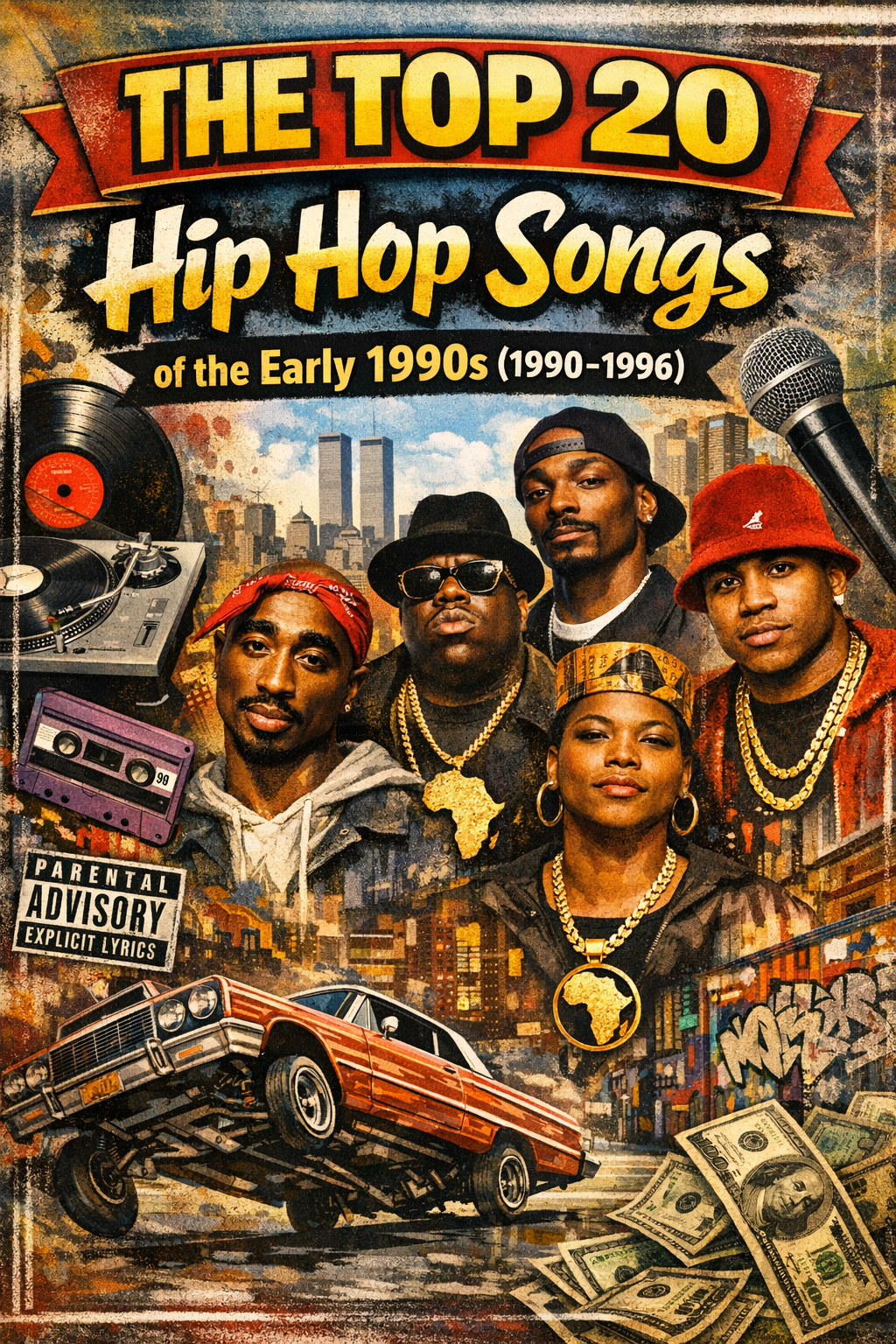
 The years 1990 to 1996 represent the purest, most creatively fertile period in hip hop history, often called the Golden Era. During this time, the genre matured from its 1980s roots into a sophisticated art form that combined intricate lyricism, revolutionary production techniques, unflinching social commentary, and growing commercial success. Affordable samplers like the E-mu SP-1200 and Akai MPC allowed producers to craft rich, layered beats from soul, jazz, funk, and rock records, creating the signature boom-bap sound on the East Coast and the smooth G-funk on the West Coast. Regional voices from the South and Midwest began emerging, while female artists asserted powerful perspectives in a male-dominated field.
This era captured America’s social tensions—the lingering crack epidemic, the 1992 Los Angeles riots following the Rodney King beating, police brutality, economic hardship, and rising Black consciousness. Hip hop became the voice for a generation, offering everything from conscious reflection and street realism to party anthems and personal vulnerability. Landmark albums such as Nas’s Illmatic (1994), The Notorious B.I.G.’s Ready to Die (1994), Dr. Dre’s The Chronic (1992), Wu-Tang Clan’s Enter the Wu-Tang (36 Chambers) (1993), and 2Pac’s All Eyez on Me (1996) set benchmarks that still influence rap today.
This ranked list of the top 20 draws from Billboard chart performance, critical consensus, cultural impact, lyrical and production innovation, and timeless replay value. The countdown format from 20 to 1 builds appreciation for the era’s depth. Each song section explores its creation, production details, lyrical content, chart success, place within the 1990-1996 landscape, artistic significance, and lasting legacy. These tracks expanded hip hop’s boundaries before the late-’90s shift toward heavier commercialization altered the industry. Their collective influence shaped fashion, slang, film, and global youth culture, resonating in modern artists from Kendrick Lamar to trap innovators. We begin the countdown with the first five entries.
20. Busta Rhymes – Woo-Hah!! Got You All in Check (1996)
Busta Rhymes’ “Woo-Hah!! Got You All in Check” hit like a sonic explosion in 1996, marking his explosive solo debut and showcasing one of hip hop’s most distinctive, high-energy personalities. Produced primarily by Busta with input from The Ummah and Spliff Star, the track features a chaotic, innovative beat built on stuttering, rapid-fire drums, sharp synth stabs, quirky sound effects, and a bouncing bassline that feels futuristic yet grounded in East Coast grit. The production deliberately avoids conventional boom-bap comfort zones, embracing eccentricity with layered ad-libs, vocal manipulations, and a relentless energy that mirrors Busta’s delivery.
Lyrically, Busta unleashes tongue-twisting verses filled with bravado, clever wordplay, and larger-than-life charisma. The unforgettable hook—“Woo-hah! Got you all in check!”—became an instant cultural catchphrase, with his cartoonish ad-libs and exaggerated enunciation turning the song into pure performance art. Released as the lead single from his debut album The Coming, it arrived during the peak of East-West coastal rivalries but refused to engage in the beef, instead injecting unbridled eccentricity and fun into the scene. The song peaked at number 8 on the Billboard Hot 100 and number 1 on the Hot Rap Singles chart, crossing over to pop audiences and launching Busta’s solo stardom.
In the context of 1990-1996, “Woo-Hah!!” served as a bridge between the raw technical focus of the Golden Era and the more theatrical, personality-driven styles that would flourish later in the decade. It built directly on the momentum from Busta’s scene-stealing verse on A Tribe Called Quest’s “Scenario” (1991), expanding that chaotic energy into a full solo statement. The music video amplified its impact with wild visuals, distorted effects, and Busta’s signature bug-eyed intensity, making it a staple on MTV and in clubs.
Critically, the track was celebrated for bringing technical skill and entertainment value together in a scene that was becoming increasingly serious with gangsta narratives. Its cultural legacy includes popularizing unorthodox flows, vocal acrobatics, and ad-lib experimentation, directly influencing artists like Missy Elliott, DMX, and later generations who embraced larger-than-life rap personas. Though ranked 20th due to the extraordinary depth of the tracks above it, “Woo-Hah!!” perfectly captures the Golden Era’s willingness to innovate sonically and performatively. It proved hip hop could be spectacle without losing street credibility, and its high replay value endures in sports arenas, playlists, and live shows—whenever the beat drops, the energy is undeniable. This song reminds us of the era’s boundless creativity, where daring production and magnetic personality could launch iconic careers.
19. OutKast – Player’s Ball (1994)
OutKast’s “Player’s Ball” arrived in 1994 as a groundbreaking introduction to Atlanta’s vibrant Southern hip hop scene, bringing a distinctive pimp-inspired aesthetic and laid-back swing to national attention. Produced by Organized Noize, the beat is a smooth, funk-infused groove featuring deep 808 bass, jazzy keyboard riffs, crisp live-sounding percussion, and subtle horn flourishes cleverly sampled and rearranged from 1970s soul records. The production creates a luxurious, unhurried atmosphere—like cruising in a Cadillac on a sunny Sunday—perfectly complementing the track’s celebratory yet street-smart tone.
Big Boi and André 3000 trade verses with seamless chemistry. Big Boi delivers grounded, hustler-minded flows detailing cars, clothes, money, and the player lifestyle, while André adds his signature eccentric flair and clever wordplay that hinted at his future boundary-pushing evolution. The catchy chorus reinforces the theme with repeatable lines that invite sing-alongs and head-nods. Released from their debut album Southernplayalisticadillacmuzik, the song dominated Billboard’s Hot Rap Singles chart for six weeks and achieved strong crossover success on the Hot 100, helping put the emerging Southern scene firmly on the map.
Within the 1990-1996 hip hop landscape, “Player’s Ball” expanded the genre’s geographic horizons beyond the traditional East and West Coast dominance, proving that Atlanta could compete with New York’s lyricism and Los Angeles’ G-funk. It provided aspirational escapism during a time of post-riot social tensions, celebrating regional pride and hustle without ignoring underlying realities. The accompanying video, filled with lowriders, fur coats, Cadillac culture, and Southern swagger, visually codified the “playa” aesthetic that would influence countless artists in the years to come, including Goodie Mob and the broader Atlanta sound that eventually reshaped the industry.
Critics praised the track for its polished production and charismatic delivery, earning it consistent placement on ’90s best-of lists. Its cultural legacy includes popularizing Southern slang like “playa” and “ballin’,” while inspiring a wave of regional pride anthems. Ranked 19th, it earns its spot for broadening hip hop’s sonic and geographic scope at a pivotal moment, even as tracks with greater emotional or technical intensity rank higher. “Player’s Ball” remains a staple at parties and in car stereos decades later, its infectious groove and confident vibe embodying the optimistic hustle that defined much of mid-’90s hip hop. It demonstrated that true innovation could emerge from any region while maintaining Golden Era craftsmanship and authenticity.
18. The Pharcyde – Passin’ Me By (1992)
The Pharcyde crafted one of the era’s most relatable and musically inventive tracks with “Passin’ Me By” in 1992, transforming the universal sting of unrequited crushes into a humorous, sample-rich jazz-rap classic. Produced by J-Swift, the beat masterfully layers multiple sources—including Quincy Jones’ “Summer in the City,” Weather Report’s “125th Street Congress,” and elements from Jimi Hendrix—into a bouncy, nostalgic soundscape. Warm basslines, crisp drums, fluttering horns, and a carefree groove give the track a live-instrumentation feel that evokes daydreaming on a perfect afternoon.
The four MCs—Imani, Bootie Brown, Fatlip, and Slimkid3—trade verses with outstanding group chemistry and distinct personalities. Each member recounts specific, vivid stories of romantic rejection with witty wordplay, self-deprecating humor, and sharp imagery, making the experience feel fresh and entertaining rather than purely melancholic. The memorable hook ties the song together with a singable, bittersweet refrain that sticks in the listener’s mind. Although it peaked modestly on mainstream charts, “Passin’ Me By” became a massive college radio and underground favorite, gaining legendary status through consistent mixtape play and word-of-mouth.
In the broader 1990-1996 context, the song stood as a highlight of the jazz-rap movement alongside A Tribe Called Quest, offering vulnerability, humor, and emotional honesty at a time when gangsta rap was gaining commercial traction. It aligned with the Native Tongues collective’s positive, eclectic ethos, countering hardcore narratives by embracing personal insecurities. The animated, daydream-style music video perfectly matched the whimsical tone, broadening its appeal to alternative and younger audiences.
The track’s influence on alternative and conscious rap remains significant, inspiring artists who prioritize introspection paired with funky, sample-driven production. It frequently appears in discussions of the best ’90s hip hop for its innovative sampling and timeless relatability—feelings of romantic oversight have not changed. Ranked 18th, it secures its place by showcasing the Golden Era’s impressive diversity and emotional range, proving that rap could explore lighthearted personal themes with musical joy and technical skill intact. Its enduring charm comes from the flawless balance of warm production and honest lyricism, making it a feel-good classic that continues to soundtrack awkward romantic memories for new generations of listeners.
17. Digable Planets – Rebirth of Slick (Cool Like Dat) (1993)
Digable Planets brought a sophisticated, insect-themed coolness to hip hop’s mainstream with “Rebirth of Slick (Cool Like Dat)” in 1993. The group-produced beat draws from jazz and funk records, weaving together horns, upright bass, crisp drums, and a relaxed nightclub groove that feels smoky and effortlessly stylish. Subtle scratches and layered instrumentation add depth, rewarding repeated listens while remaining instantly accessible and head-nodding.
Butterfly, Ladybug Mecca, and Doodlebug deliver smooth, reference-heavy rhymes that touch on coolness, subtle activism, everyday life, and cultural observations. Their flows are laid-back yet precise, and the infectious hook—“I’m cool like dat”—quickly became a shorthand for understated swagger. Released from their debut album Reachin’ (A New Refutation of Time and Space), the song spent three weeks at number one on the Hot Rap Singles chart, achieved solid pop crossover, and won a Grammy for Best Rap Performance by a Duo or Group, validating the commercial potential of jazz-rap.
Amid the 1993 dominance of G-funk and the East Coast hardcore resurgence, Digable Planets offered an intellectual, bohemian alternative that expanded hip hop’s sonic and thematic possibilities. Their stylish, retro video reinforced the group’s image as thoughtful outsiders in the scene. The track highlighted the era’s remarkable creative breadth, demonstrating that rap could be cool, conscious, and danceable without relying on aggression or confrontation.
Its legacy includes frequent sampling in later productions and consistent praise for blending jazz sophistication with hip hop rhythms so seamlessly. Ranked 17th, it earns recognition for its innovation and crossover success, even as rawer emotional or technically denser tracks sit higher on the list. “Rebirth of Slick (Cool Like Dat)” remains a timeless vibe whose cool factor has not diminished with time. It captures the Golden Era’s experimental spirit and serves as a reminder that hip hop could intellectually stimulate listeners while still moving the body and the mind.
16. Salt-N-Pepa – Expression (1990)
Salt-N-Pepa launched the decade with feminist empowerment and infectious dance energy through “Expression” in 1990. Produced in collaboration with Hurby “Luv Bug” Azor, the track incorporates James Brown samples into an upbeat, New Jack Swing-influenced beat featuring strong basslines, claps, and energetic production that made it irresistible on the dance floor. The lyrics deliver a direct call for self-expression and confidence (“Express yourself… don’t repress yourself”), performed with the trio’s signature charisma and unapologetic female perspective.
The song spent eight weeks at number one on the Hot Rap Singles chart and achieved wide pop crossover success, proving that rap could be both empowering and commercially viable. Its energetic music video, complete with strong choreography, further amplified the message of self-confidence and body positivity. In 1990, as hip hop transitioned fully into the Golden Era, Salt-N-Pepa used the platform to assert women’s voices and perspectives in a rapidly expanding but still male-dominated field, paving the way for artists like Queen Latifah, MC Lyte, and later generations of female MCs.
The cultural impact of “Expression” includes its role in promoting self-love and empowerment themes within rap music at a time when such messages were still groundbreaking. Ranked 16th, the track earns its position for its pioneering representation, early commercial dominance, and positive energy that helped set an inclusive tone for the era. Its catchy production and uplifting spirit make it a foundational piece that continues to inspire confidence and self-expression today.