 There are horror movies about families. There are horror movies about killers. And then there are Troma movies, where the family might be insane, the killers might be wearing homemade costumes, and the entire production seems to have been created by people who looked at good taste and decided it was getting in the way.
Mother’s Day is a perfect example.
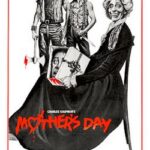
Released in 1980 and produced by Troma Entertainment, Mother’s Day is a nasty, strange and frequently hilarious piece of exploitation horror that takes the concept of the loving family and throws it directly into a wood chipper. It follows three friends who head into the woods for a reunion and quickly discover that the area is occupied by a deeply disturbed family consisting of Mother and her two sons, Ike and Addley.
And these aren’t exactly the kind of people you invite over for Thanksgiving.
Mother is the centerpiece of the entire nightmare. She is controlling, violent and completely devoted to raising her sons according to her own horrifying definition of family values. Ike and Addley are essentially grown-up children who have somehow managed to turn their mother’s terrible parenting into a full-time lifestyle.
The setup is classic exploitation cinema: three women venture into an isolated area, encounter a strange family and realize far too late that they are in serious trouble.
But Mother’s Day isn’t content to simply be a straightforward slasher.
That’s where Troma comes in.
The movie constantly bounces between horror, black comedy, absurdity and outright nastiness. One moment you’re watching a genuinely uncomfortable sequence, and the next you’re wondering whether the filmmakers have intentionally made the entire thing ridiculous.
The answer is probably yes.
Troma has always understood that there is a very specific audience for movies that don’t know when to stop. Mother’s Day is practically a declaration of war against restraint.
The production is undeniably low budget, but that works in its favor more often than not. The movie has the grimy, homemade appearance that makes exploitation films from this era so much fun. The woods look genuinely isolated, the interiors feel unpleasant and the whole movie has the atmosphere of something you probably shouldn’t have discovered while flipping through late-night television.
The characters are exaggerated, but that is exactly what the movie requires.
Mother is not a subtle villain. She isn’t sitting around contemplating the psychological consequences of her actions. She’s a monstrous version of the overbearing parent, except her methods of discipline involve things that would probably get a normal parent arrested approximately twelve seconds after the authorities arrived.
Ike and Addley aren’t much better.
Their relationship with Mother is one of the movie’s more interesting elements because it gives the story a warped sense of family structure. They are violent because they’ve been raised to be violent, but they are also desperate for Mother’s approval.
It’s dysfunctional family therapy with considerably more screaming.
The three female leads provide the movie with something important: characters you actually want to see survive.
Abbey, Jackie and Trina aren’t simply interchangeable victims waiting for the next attack. Their friendship gives the early sections of the movie a sense of normality, which makes the transition into the nightmare more effective.
Once the characters realize what they’ve stumbled into, the movie becomes a battle of survival.
And that’s when Mother’s Day really starts getting nasty.
The violence is deliberately excessive, but the movie’s most memorable moments often come from the combination of horror and absurdity rather than the gore itself. Troma understands that sometimes the best way to make something disturbing is to make it just ridiculous enough that you’re laughing while simultaneously thinking, “This is really messed up.”
That balance is difficult.
If the movie were played completely straight, some of the material would simply be unpleasant.
If it were played entirely for laughs, the tension would disappear.
Instead, Mother’s Day lives somewhere in between.
You never quite know whether you’re supposed to cringe, laugh or wonder how the filmmakers convinced everyone involved to actually make the scene.
That’s basically the Troma experience.
The movie also has a distinctly early-’80s exploitation sensibility. There is no interest in making the violence tasteful or the villains sympathetic. The film isn’t trying to provide a sophisticated psychological explanation for everything.
Sometimes the answer is simply:
These people are completely insane.
Deal with it.
The biggest weakness is that the movie can feel uneven. Some sequences are genuinely effective, while others go so far into camp that the horror almost disappears. The pacing can also feel loose, particularly compared with more polished horror movies from the same period.
But polish isn’t really the point.
If you want Halloween, watch Halloween.
If you want The Texas Chain Saw Massacre, watch The Texas Chain Saw Massacre.
If you want a movie that feels like someone took a chainsaw, a bucket of fake blood, several bad ideas and a deeply inappropriate sense of humor and threw everything into a blender, Mother’s Day is considerably closer to what you’re looking for.
That’s why the movie has lasted.
It has personality.
A lot of horror movies from this era have been forgotten because they were simply trying to imitate whatever was popular at the time. Mother’s Day is different. Even when it isn’t particularly good, it is unmistakably itself.
The movie also represents something important about Troma’s place in independent cinema. The studio built an audience around filmmakers who didn’t have enormous budgets but were willing to embrace outrageous ideas. The result was a catalog of movies that could be crude, offensive, ridiculous and occasionally surprisingly creative.
Mother’s Day fits comfortably into that tradition.
It’s not elegant.
It’s not subtle.
It definitely isn’t for everyone.
But if you’re watching Troma, those probably aren’t the qualities you’re looking for anyway.
You’re looking for something that makes you say, “What the hell did I just watch?”
Mother’s Day accomplishes that goal quite efficiently.
The movie takes something universally associated with warmth, family and affection and turns it into an excuse for exploitation horror. The irony is obvious, but the filmmakers never waste much time explaining it.
They just keep making things worse.
And then worse again.
And then somehow even worse.
That’s the charm.
Mother’s Day is a filthy little horror movie with a nasty sense of humor, a wonderfully unhinged central family and exactly the kind of low-budget insanity that made Troma famous.
It isn’t a masterpiece.
It isn’t supposed to be.
It’s a cult movie designed to make you uncomfortable, make you laugh and occasionally make you question your own decision-making for watching it in the first place.
And honestly, that’s a pretty good Mother’s Day gift.
Final Score: 7/10
Mother’s Day is crude, violent, ridiculous and completely unafraid of crossing lines. It isn’t polished enough to be considered a classic horror film in the traditional sense, but as a piece of Troma exploitation cinema, it delivers exactly what it promises.
Just don’t bring Mom.
Where to Stream
Stream for Free HERE on Tubi