 History is filled with strange events that continue to puzzle scientists centuries later. Entire villages have vanished without explanation. Ships have been discovered drifting empty across the oceans. People have claimed to witness unexplained lights in the sky for thousands of years.
Yet few historical mysteries are as bizarre—or as unsettling—as the Dancing Plague of 1518.
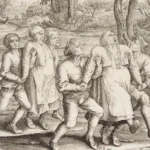
During the summer of 1518, hundreds of people in the city of Strasbourg began dancing uncontrollably in the streets. They danced for hours. Then days. Then weeks. Many appeared unable to stop despite collapsing from exhaustion. According to historical accounts, some dancers suffered heart attacks, strokes, or complete physical collapse as their bodies gave out.
What could possibly cause hundreds of otherwise ordinary people to dance until they literally danced themselves to death?
More than 500 years later, historians, doctors, and psychologists still debate the answer.
Strasbourg in 1518
To understand the mystery, it’s important to understand the world in which it occurred.
Strasbourg, located in the Holy Roman Empire (now part of modern-day France), was a city under enormous pressure.
The early 1500s were difficult years throughout Europe.
Harvests had failed.
Food shortages were common.
Disease spread regularly through crowded communities.
Political instability and religious tensions created widespread anxiety.
Most ordinary people lived physically demanding lives with little certainty about the future.
Stress wasn’t simply an occasional inconvenience.
It was part of daily survival.
Into this already difficult environment came one of history’s strangest outbreaks.
One Woman Starts Dancing
According to historical records, everything began in July 1518.
A woman named Frau Troffea stepped into the street and began dancing.
There was no music.
There was no celebration.
She simply started dancing.
At first, neighbors assumed she would stop after a few minutes.
She didn’t.
She continued dancing for hours.
Then throughout the day.
Then into the next.
Historical accounts suggest she danced almost continuously for several days.
Soon something even stranger happened.
Other people joined her.
The Crowd Grows
Within a week, dozens of people were dancing.
Within a month, contemporary reports claim the number had grown to several hundred participants.
Some estimates suggest around 400 people became involved.
Many didn’t appear to be enjoying themselves.
Witnesses described exhausted faces, swollen feet, and bodies moving almost against their owners’ will.
Some dancers reportedly cried while continuing to move.
Others begged for help.
Yet they seemed unable to stop.
Eventually, people began collapsing from fatigue.
Several reportedly died from strokes, heart failure, or exhaustion after days of nearly nonstop movement.
Although exact casualty numbers remain uncertain, contemporary accounts describe multiple deaths occurring during the outbreak.
Authorities Make Things Worse
City officials faced an unprecedented situation.
They had no medical explanation.
Ironically, they concluded that the dancers simply needed to dance the illness out of their systems.
Rather than discouraging the activity, authorities encouraged it.
They hired musicians.
Professional dancers were brought in.
Stages were constructed.
The hope was that allowing the afflicted to continue dancing would eventually cure them.
Instead, the epidemic appeared to worsen.
More people joined.
More participants collapsed.
Eventually officials abandoned this strategy altogether.
A Religious Solution
After realizing music and dancing weren’t helping, local authorities turned toward religion.
Many people believed the dancers had been cursed by Saint Vitus, a Christian martyr who had long been associated in European folklore with uncontrollable movements and nervous disorders.
Officials organized religious processions.
The afflicted were taken to shrines dedicated to Saint Vitus.
Special prayers were offered.
Participants wore blessed shoes marked with crosses.
Whether because of these efforts or because the outbreak naturally ended, the dancing gradually subsided over the following weeks.
Eventually, it disappeared entirely.
Just as mysteriously as it had begun.
Was It Really a Plague?
Unlike diseases caused by bacteria or viruses, the Dancing Plague wasn’t contagious in the traditional sense.
People weren’t infected through coughing.
There was no visible pathogen.
Instead, something appeared to spread through observation and social interaction.
That has led researchers toward several fascinating theories.
No single explanation has gained universal acceptance.
Each possibility solves part of the mystery while leaving important questions unanswered.
Theory One: Mass Psychogenic Illness
Today, the leading explanation among historians and psychologists is something called mass psychogenic illness, sometimes referred to as mass hysteria.
This phenomenon occurs when extreme psychological stress manifests as genuine physical symptoms that spread throughout groups of people.
Importantly, the symptoms are real.
Victims aren’t pretending.
Their minds produce authentic physical responses without conscious control.
Modern examples have included unexplained fainting episodes in schools, mysterious illnesses affecting factory workers, and outbreaks of unusual physical symptoms that disappear once the underlying stress subsides.
Supporters of this theory argue Strasbourg’s population had endured years of famine, disease, economic hardship, and fear.
Under those extraordinary pressures, psychological distress may have erupted into uncontrollable physical behavior.
Theory Two: Poisoned Grain
Another popular theory involves ergot fungus.
Ergot grows on rye, a grain commonly used to make bread during the Middle Ages.
The fungus produces chemicals related to compounds later used in LSD production.
Consuming contaminated grain can cause hallucinations, muscle spasms, convulsions, and unusual behavior.
At first glance, this explanation sounds convincing.
However, many researchers now consider it unlikely.
Ergot poisoning usually produces severe physical symptoms that would make sustained dancing nearly impossible.
Victims often experience intense pain, loss of coordination, and gangrene rather than rhythmic movement lasting days.
While contaminated food may have contributed to some strange historical events, most experts doubt it fully explains Strasbourg’s dancing epidemic.
Theory Three: Religious Ecstasy
Some historians emphasize the importance of religious belief.
People living in sixteenth-century Europe often interpreted illness through spiritual rather than scientific frameworks.
Belief in divine punishment, miracles, curses, and saints formed an ordinary part of everyday life.
If enough people genuinely believed supernatural forces could compel dancing, those expectations might have influenced behavior during periods of emotional crisis.
This doesn’t necessarily contradict the psychological explanation.
Instead, religious beliefs may have shaped how psychological stress expressed itself.
Similar Events Throughout Europe
Remarkably, Strasbourg wasn’t alone.
Europe experienced several dancing outbreaks between the 14th and 17th centuries.
One famous incident occurred in Aachen, Germany, during the 1370s.
Other reports appeared in Belgium, Luxembourg, and parts of France.
Most outbreaks shared similar characteristics.
Large groups danced uncontrollably.
Participants often reported exhaustion.
Religious explanations frequently emerged.
Eventually the behavior disappeared.
These recurring episodes suggest Strasbourg’s experience wasn’t completely unique, although it remains the best documented.
Medical Mystery Meets Human Psychology
One reason the Dancing Plague continues fascinating researchers is that it sits at the intersection of multiple disciplines.
Medicine examines possible neurological causes.
Psychology studies collective behavior under extreme stress.
History reconstructs the social conditions surrounding the event.
Religious scholars analyze contemporary beliefs about curses and miracles.
Each field contributes valuable insights.
Together they paint a picture of a society experiencing extraordinary hardship in ways modern audiences sometimes struggle to imagine.
Separating Myth from Reality
As with many events from five centuries ago, some details have undoubtedly become exaggerated.
Exact participant numbers remain uncertain.
Reports of daily death totals may have increased through repeated retellings.
Contemporary chroniclers sometimes blended observation with religious interpretation.
Nevertheless, historians generally agree the central event genuinely occurred.
Multiple independent historical records describe the dancing outbreak.
Official documents mention government responses.
Medical writings from the period discuss the phenomenon.
The mystery isn’t whether something happened.
The mystery is exactly why.
Why the Dancing Plague Still Matters
At first glance, the Dancing Plague seems almost humorous.
Hundreds of people dancing nonstop sounds like something from fantasy fiction.
Looking closer reveals something much more profound.
The outbreak reminds us that the human mind and body remain deeply connected.
Extreme stress can produce astonishing physical consequences.
Modern medicine recognizes numerous conditions in which psychological factors create genuine physical symptoms.
The Strasbourg dancers weren’t simply choosing to dance.
Whatever afflicted them appears to have been terrifyingly real.
Their suffering also reminds us how dramatically historical circumstances influence human behavior.
Living through famine, disease, political instability, and constant uncertainty created pressures few people today can fully appreciate.
One of History’s Greatest Unsolved Mysteries
More than 500 years after the streets of Strasbourg filled with exhausted dancers, the Dancing Plague of 1518 continues to challenge easy explanations. It remains one of the most unusual documented events in European history, blending medicine, psychology, religion, and folklore into a mystery that refuses to disappear.
While mass psychogenic illness currently provides the most convincing explanation, no theory answers every question. Why did it begin with one woman? Why did it spread so quickly? Why did it stop almost as suddenly as it started? Those uncertainties continue to intrigue researchers and historians alike.
Perhaps that’s why the story has endured for centuries. It reminds us that history isn’t merely a collection of kings, wars, and political treaties. It’s also filled with extraordinary human experiences that reveal how little we sometimes understand about ourselves.
The Dancing Plague of 1518 stands as one of those unforgettable moments—a time when hundreds of ordinary people found themselves caught in an inexplicable epidemic, moving to music that no one else could hear, until exhaustion finally brought one of history’s strangest chapters to an end.