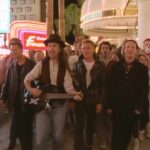
 When U2 released “I Still Haven’t Found What I’m Looking For” in 1987, they were already one of the biggest rock bands of the decade. But the song represented another step forward for a group that had spent much of its career trying to expand the possibilities of what a rock band could sound like.
Released as the second single from The Joshua Tree, the song was built around a deceptively simple idea: the search for something meaningful that never quite ends. It could be interpreted as a love song, a spiritual reflection, or a statement about ambition and dissatisfaction. That ambiguity helped make it one of U2’s most enduring recordings.
The song began with a very different musical foundation than the finished version. Drummer Larry Mullen Jr. had been experimenting with a rhythm that producer Daniel Lanois and the band developed into something with a distinctive gospel influence. Guitarist The Edge then created the shimmering, echo-heavy guitar sound that became one of the recording’s defining characteristics.
The result was unlike much of the arena rock dominating the 1980s.
It was big without being bombastic.
The rhythm was steady and hypnotic, while The Edge’s guitar seemed to float above the arrangement. Then Bono’s voice entered, delivering the song with a mixture of certainty and doubt.
That contradiction is central to the recording.
The singer is searching, but he hasn’t arrived.
He has experienced love, traveled, struggled, believed, doubted, and continued moving forward, yet something remains unresolved. The song never provides a neat answer.
That made it particularly powerful.
“I Still Haven’t Found What I’m Looking For” became one of U2’s biggest American hits, reaching number one on the Billboard Hot 100. It also became a major international success and helped The Joshua Tree become one of the defining albums of the 1980s.
The song’s gospel influence was especially notable. U2 had incorporated religious imagery throughout their career, but here the connection between rock music and gospel was unusually direct. The backing vocals and arrangement gave the song a spiritual atmosphere without turning it into a conventional religious recording.
Then there was Bono’s performance.
Rather than singing the song like a traditional rock anthem, he gradually increases the emotional intensity. His voice sounds both powerful and vulnerable, perfectly matching the central idea of someone who continues searching despite never finding exactly what they want.
The song also represented the evolution of U2’s sound during the 1980s. They had started the decade as a relatively straightforward post-punk band from Dublin. By 1987, they were making expansive, atmospheric rock that incorporated American blues, gospel, roots music, and experimental production.
The Joshua Tree was the culmination of that development.
“I Still Haven’t Found What I’m Looking For” was one of the clearest examples of how far they had come.
It wasn’t built around a flashy guitar solo or a complicated arrangement. Instead, its power came from atmosphere, repetition, vocal performance, and an idea almost everyone can understand.
The feeling that you’ve accomplished something but still aren’t quite where you want to be.
That feeling doesn’t belong to 1987.
It is timeless.
More than three decades later, the song remains one of U2’s signature recordings and one of the defining rock songs of the late 1980s. Its combination of rock, gospel, and atmospheric production helped broaden the sound of mainstream rock while giving U2 one of their most enduring songs.
And perhaps the most interesting thing about the title is that it never promises the search will end.
The journey continues.
The questions remain.
And somehow, that uncertainty is exactly what makes the song so powerful.