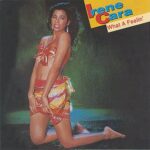
 Few songs capture the sheer optimism of the early 1980s quite like Irene Cara’s “Flashdance… What a Feeling.” It is a song about ambition, determination, dreams, and the almost ridiculous confidence that everything might actually work out if you just believe in yourself hard enough.
Released in 1983 as the centerpiece of the soundtrack to Flashdance, the song became much bigger than the movie. It was a massive international hit, a defining song of its era, and one of the most recognizable combinations of pop music and cinema ever recorded.
It also represented a remarkable moment in Irene Cara’s career. Only a few years earlier, she had already become famous for “Fame,” the title song from the 1980 film and television series. “Flashdance… What a Feeling” turned her into one of the biggest pop stars in the world.
The song’s success wasn’t accidental. It was the product of an unusually effective combination of musicians, writers, producers, technology, and a movie perfectly suited to the cultural moment.
And at the center of all of it was Cara’s voice.
From Fame to Flashdance
Irene Cara was already an established star before “Flashdance… What a Feeling.”
Born in New York City, Cara began performing as a child and built an impressive résumé in theater, television, and music. Her major breakthrough came with Fame, the 1980 film about students at New York’s High School of Performing Arts.
Cara played Coco Hernandez, one of the film’s central characters, and performed the title song.
“Fame” became an enormous hit.
The song won the Academy Award for Best Original Song and helped establish Cara as an artist capable of crossing between acting and music without either career feeling like a side project.
That distinction became important when Flashdance arrived.
The movie’s central character, Alex Owens, is a young woman working as a welder while pursuing her dream of becoming a professional dancer.
It was essentially the perfect setup for a big inspirational pop song.
The challenge was creating one that didn’t feel like generic movie soundtrack filler.
The solution came from a remarkable songwriting collaboration.
Giorgio Moroder Enters the Picture
The music for “Flashdance… What a Feeling” was written by Giorgio Moroder, Keith Forsey, and Irene Cara.
Moroder was already one of the most important figures in electronic pop music.
The Italian-born producer had helped pioneer the use of synthesizers, drum machines, sequencers, and electronic production techniques in mainstream music.
His work with Donna Summer had already transformed dance music.
By the early 1980s, electronic instruments were becoming increasingly important to pop music, and Moroder understood how to combine those sounds with traditional songwriting.
Keith Forsey was another crucial part of the equation.
A highly experienced musician and producer, Forsey had worked on numerous recordings and was deeply involved with the emerging sound of 1980s pop.
Cara herself contributed to the lyrics.
That combination gave the song something particularly effective: it sounded futuristic without abandoning the emotional directness of a traditional pop song.
The synthesizers made it sound like 1983.
Cara’s vocal made it feel timeless.
The Movie Needed a Song
Flashdance was released in April 1983.
The movie itself was not initially expected to become a phenomenon on the scale it eventually did.
Its story was relatively straightforward.
Alex Owens works a physically demanding job during the day while dancing at night. She dreams of being accepted into a prestigious dance school but struggles with confidence, money, and the circumstances of her life.
It is classic underdog storytelling.
But Flashdance had something else working in its favor.
It looked incredible.
The movie was built around movement, music, lighting, editing, and visual style.
The famous dance sequences became enormously influential.
And the soundtrack was essential to the movie’s identity.
Instead of treating the music as something happening behind the story, Flashdance essentially made the music part of the story.
That was a major reason the soundtrack became such a phenomenon.
And “Flashdance… What a Feeling” was its emotional centerpiece.
The Opening Synthesizer
The song begins with a sound that immediately places you in the early 1980s.
The synthesizer arrangement creates an atmosphere that feels almost cinematic before Cara sings a word.
Then her voice arrives.
She doesn’t ease into the performance.
She sounds completely committed.
That is one of the song’s greatest strengths.
There is no ironic distance.
No attempt to make the sentiment seem cooler than it is.
“Flashdance… What a Feeling” believes in its message completely.
That kind of sincerity can be difficult to pull off.
In lesser hands, an inspirational song can become unbearably cheesy.
Cara sells it.
She sounds like someone who genuinely believes that ambition and hard work can change a person’s life.
That conviction is what makes the song work.
The Chorus
The chorus is the part everybody knows.
It rises dramatically, building from the verses into a huge, soaring declaration.
The melody is simple enough to remember instantly but powerful enough to create a sense of release.
That combination is extremely difficult to achieve.
The best pop choruses feel inevitable.
Once you hear the verses, you can almost sense where the song needs to go.
“Flashdance… What a Feeling” does exactly that.
The production keeps increasing the scale until the chorus feels enormous.
The synthesizers expand.
The rhythm becomes more forceful.
Cara pushes her voice higher.
Everything is designed to create momentum.
And then the song gives you exactly what you were waiting for.
The Dance Connection
The song’s greatest trick may be the way it connects physical movement with emotional ambition.
The lyrics describe the sensation of dancing and the feeling of pursuing a dream, but the song itself also behaves like a dance.
The rhythm is steady and propulsive.
The synthesizers provide constant forward movement.
The arrangement builds rather than simply repeating.
It feels like something is happening.
That made it particularly effective in Flashdance, where dance itself represents freedom and self-expression.
Alex isn’t simply trying to become a better dancer.
She is trying to become a different version of herself.
The song gives that transformation a musical voice.
The 1980s Sound
Listening to “Flashdance… What a Feeling” today is also an interesting lesson in how quickly pop production can define an era.
The synthesizers are unmistakably early 1980s.
The drum sounds are enormous.
The production has a polished, electronic sheen that would have been difficult to achieve in the same way a decade earlier.
This was the era when electronic instruments were moving from experimental studios into mainstream pop.
Artists were discovering that technology didn’t have to replace emotion.
It could amplify it.
Moroder understood that particularly well.
His productions could be mechanical without feeling cold.
The technology created the architecture.
The human voice provided the emotion.
That balance became one of the defining sounds of 1980s pop.
A Massive Hit
“Flashdance… What a Feeling” became one of the biggest singles of 1983.
It reached number one on the Billboard Hot 100 in the United States and topped charts in numerous other countries.
The song became a fixture on radio stations, MTV, movie soundtracks, television programs, dance floors, and eventually countless compilations celebrating the music of the 1980s.
Its success also helped turn the Flashdance soundtrack into a major commercial success.
The movie and soundtrack effectively fed each other.
People watched the movie and wanted the music.
People heard the music and wanted to see the movie.
That relationship between cinema and pop music would become increasingly important throughout the decade.
The Academy Awards
The song’s success reached another level at the 1984 Academy Awards.
“Flashdance… What a Feeling” won the Academy Award for Best Original Song.
For Irene Cara, it was another Oscar-winning song following “Fame.”
That made her a rare artist to become closely associated with multiple Academy Award-winning movie songs.
The achievement was even more impressive because Cara wasn’t simply the performer.
She was also one of the song’s lyricists.
Her involvement gave the song a personal connection to the character and story rather than making her merely the voice hired to sing someone else’s composition.
The Song Became Bigger Than the Movie
One of the most interesting things about “Flashdance… What a Feeling” is that you don’t need to have seen Flashdance to know it.
That isn’t true of every successful movie song.
Some become inseparable from a particular scene.
Others are remembered primarily because of the movie.
“Flashdance… What a Feeling” escaped that limitation.
It became a standalone pop song.
You could hear it on the radio without knowing anything about Alex Owens.
The message worked independently.
That is one reason the song has survived.
Its subject isn’t really dancing.
It is aspiration.
It is the idea of wanting something badly enough to pursue it.
That is considerably more universal.
The Music Video Era
The song also arrived at exactly the right moment for MTV.
Music television was transforming the relationship between artists and audiences.
A successful song could now become a visual experience as well as an audio one.
“Flashdance… What a Feeling” benefited enormously from that environment.
The imagery associated with Flashdance became part of the song’s identity.
Sweat.
Dance studios.
Leg warmers.
1980s fashion.
Dramatic lighting.
Hard work.
Movement.
The entire visual vocabulary of the movie became intertwined with the song.
It is difficult to hear the opening synthesizer today without immediately imagining the visual world of Flashdance.
That is the power of a great soundtrack song.
Why the Song Still Works
The biggest question with many 1980s hits is whether they survive once the production style becomes dated.
Synthesizers can sound dated.
Drum machines can sound dated.
Fashion certainly becomes dated.
But “Flashdance… What a Feeling” continues to work because its emotional core is stronger than its production technology.
The technology gives it historical character.
Cara’s performance gives it longevity.
There is an almost startling lack of cynicism in the song.
It isn’t trying to convince you that dreams are stupid.
It isn’t telling you that success is guaranteed.
It simply embraces the idea that pursuing something you love can be exhilarating.
That message has an enormous amount of staying power.
Irene Cara’s Voice
Cara’s voice is perhaps the most important ingredient.
She had tremendous control, but she never made the performance feel overly technical.
The song requires power without screaming.
Emotion without melodrama.
Confidence without arrogance.
Cara manages all three.
Her voice gets larger as the song progresses, but the performance never loses its musicality.
That is why countless singers have performed the song over the years without necessarily capturing the magic of the original.
The melody is accessible.
The performance is not.
You can sing the notes.
It is much harder to reproduce the feeling.
The Legacy
“Flashdance… What a Feeling” became one of the defining songs of the 1980s.
Its influence can be heard indirectly in countless inspirational pop songs that followed.
The formula became familiar:
Start with a personal dream.
Build the arrangement.
Introduce a massive chorus.
Make the production enormous.
End with the listener feeling like they can accomplish something.
But what makes the original special is that it doesn’t feel like a formula when you’re hearing it.
It feels like a genuine emotional release.
That is partly because the song arrived before the formula had become overused.
And partly because Irene Cara was exceptionally good at selling it.
More Than a Nostalgia Song
It would be easy to dismiss “Flashdance… What a Feeling” as simply another nostalgic 1980s hit.
That would miss what made it important.
Yes, the synthesizers scream 1983.
Yes, the song is associated with leg warmers, dance movies, neon colors, and the visual culture of the decade.
But underneath all of that is a remarkably efficient piece of pop songwriting.
The melody works.
The arrangement works.
The production works.
The vocal works.
And the connection to the movie works.
Every component is doing the same thing.
Everything points upward.
That is why the song feels so uplifting.
It was constructed to create momentum from beginning to end.
Irene Cara’s Complicated Legacy
Cara’s career after “Flashdance… What a Feeling” never reached the same level of mainstream dominance.
That can sometimes cause an artist’s legacy to become distorted.
People remember the song but forget the performer.
They remember the movie but forget the person whose voice made the song unforgettable.
That is unfortunate because Cara had already demonstrated her abilities years earlier with “Fame.”
Together, “Fame” and “Flashdance… What a Feeling” represent two of the defining movie songs of the early 1980s.
They also demonstrate how important Cara was to the sound of that period.
She wasn’t simply lucky enough to sing two successful songs.
She had the voice and performance ability necessary to turn them into cultural landmarks.
A Song That Refuses to Quit
The best inspirational songs can sometimes become irritating because they try too hard to inspire.
“Flashdance… What a Feeling” avoids that problem because it sounds joyous rather than preachy.
It doesn’t feel like somebody giving you a motivational speech.
It feels like somebody discovering something.
The excitement is contagious.
That’s why the song continues to appear in movies, television programs, commercials, sporting events, karaoke rooms, dance performances, and countless 1980s retrospectives.
People recognize it almost instantly.
The opening notes arrive, and you know exactly where you’re going.
For a few minutes, everything becomes bigger.
The dream seems possible.
The music gets louder.
The chorus arrives.
And Irene Cara sounds absolutely convinced that something wonderful is about to happen.
Final Thoughts
“Flashdance… What a Feeling” is one of those rare songs where the movie, the singer, the songwriting, and the production all became inseparable.
Giorgio Moroder and Keith Forsey provided the musical framework.
Irene Cara helped shape the words and delivered the definitive performance.
Flashdance provided the story.
The early 1980s provided the technological and cultural moment.
Together, they created something that has lasted far longer than anyone could reasonably have expected from a song written for a dance movie.
The production may immediately transport you back to 1983.
The synthesizers may sound like 1983.
The fashion associated with it may scream 1983.
But the emotion doesn’t belong to any particular decade.
Wanting to achieve something.
Working for it.
Feeling terrified that you might fail.
And then, for one glorious moment, believing that you actually can do it.
That’s what “Flashdance… What a Feeling” captured.
And Irene Cara made us believe it.