 Most shortages happen for obvious reasons.
A hurricane disrupts supply chains.
A strike halts production.
A drought damages crops.
The Great Toilet Paper Scare of 1973 was different.
There was no nationwide shortage of toilet paper when Americans suddenly began emptying supermarket shelves. Factories were still producing it. Stores were still receiving shipments. Yet within weeks, millions of people became convinced that toilet paper was about to disappear, leading to one of the strangest examples of panic buying in American history.
What makes the story even more remarkable is how it began.
Not with a natural disaster.
Not with a government warning.
Not even with an actual shortage.
Instead, it started with a misunderstanding that snowballed into a nationwide buying frenzy—and one famous television joke that unintentionally made everything much worse.
America in the Early 1970s
To understand why people reacted the way they did, it’s important to remember what life was like in the United States during the early 1970s.
The country had already experienced several genuine shortages.
The 1973 oil crisis created long lines at gas stations.
Inflation was rising.
Food prices were climbing.
Americans were hearing constant news about supply problems affecting everything from gasoline to meat.
Trust in government had also been shaken by political scandals, while economic uncertainty left many families worried about the future.
Against that backdrop, people were already expecting bad news.
It didn’t take much to convince them another shortage was around the corner.
A Congressman Raises the Alarm
The first spark came in December 1973.
Representative Harold Froehlich of Wisconsin spoke on the floor of Congress about concerns involving paper supplies.
At the time, there were discussions about shortages affecting certain types of paper products because of increased demand and concerns within the paper industry.
Froehlich warned that Americans should be aware of the possibility of a toilet paper shortage.
His comments received relatively little attention initially.
After all, congressional speeches rarely become front-page news.
But his statement existed.
And once it entered the public record, it became available for others to repeat.
Johnny Carson Changes Everything
The real turning point came a few days later.
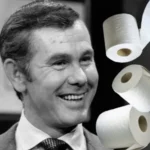
On December 19, 1973, Johnny Carson opened an episode of The Tonight Show with a joke during his monologue.
Carson told his audience there was reportedly a shortage of toilet paper.
He encouraged viewers, humorously, to rush out and buy some before it disappeared.
The audience laughed.
It was clearly intended as comedy.
There was just one problem.
Millions of Americans trusted Johnny Carson.
At the time, The Tonight Show attracted enormous audiences every evening. Carson was one of the most recognizable and respected personalities in the country.
Many viewers didn’t recognize the statement as exaggeration.
Others heard only part of the joke.
Some simply remembered hearing the words “toilet paper shortage.”
That was enough.
Panic Buying Begins
Within days, shoppers began purchasing unusually large quantities of toilet paper.
Supermarket managers noticed customers filling shopping carts with packages far beyond their normal needs.
Some families bought enough to last months.
Others purchased enough for an entire year.
Store shelves emptied quickly.
Ironically, those empty shelves became visual proof that something must be wrong.
People walking into stores saw missing products and assumed the shortage had already begun.
That prompted even more buying.
The panic had become self-sustaining.
A Self-Fulfilling Prophecy
One of the most fascinating aspects of the toilet paper scare is that it created the very shortage people feared.
Manufacturers had been producing normal quantities.
Those production levels easily satisfied ordinary consumer demand.
What factories couldn’t accommodate was millions of people simultaneously deciding to buy several months’ worth of toilet paper.
Even efficient supply chains have limits.
Stores typically keep only enough inventory to meet expected demand until the next shipment arrives.
When shoppers suddenly purchased ten times more than usual, shelves emptied almost instantly.
Factories worked overtime.
Distributors increased deliveries.
Yet demand continued outpacing supply—not because production had stopped, but because consumers had dramatically changed their behavior.
Psychology Takes Over
The Great Toilet Paper Scare demonstrates several well-understood principles of human psychology.
Fear spreads quickly.
People often look to others for guidance during uncertain situations.
If everyone else appears worried, individuals assume there must be a legitimate reason.
Empty shelves reinforce that belief.
Each shopper thinks:
“If everyone else is buying it, maybe I should too.”
Even people who initially doubted the rumors often bought extra toilet paper simply because they feared they wouldn’t find any later.
Nobody wanted to be the only household without supplies if the rumors turned out to be true.
That fear drove demand even higher.
The Role of Television
Today, information spreads primarily through social media.
In 1973, television held enormous influence over public opinion.
Millions of Americans watched the same evening news programs.
Millions watched Johnny Carson before going to bed.
Because relatively few media outlets existed, trusted television personalities possessed tremendous credibility.
Carson later expressed surprise that viewers had taken his joke seriously.
He had intended nothing more than a humorous opening monologue.
Instead, he inadvertently demonstrated just how much influence mass media could have over public behavior.
The incident became one of the most famous examples of entertainment affecting real-world economics.
Stores Struggle to Keep Up
Retailers found themselves caught in an impossible situation.
Customers demanded more toilet paper than suppliers could deliver.
Some stores imposed purchase limits.
Others rationed available inventory.
Employees answered endless questions from anxious shoppers.
Managers repeatedly explained that factories were still producing toilet paper.
Many customers remained unconvinced.
After all, they could see empty shelves with their own eyes.
The visual evidence seemed stronger than official reassurances.
The irony wasn’t lost on retailers.
People were creating shortages by attempting to avoid shortages.
The Manufacturers Respond
Paper manufacturers publicly insisted there was no production crisis.
Factories continued operating.
Raw materials remained available.
The problem wasn’t manufacturing.
The problem was demand.
Industry representatives urged Americans to purchase only what they normally needed.
Gradually, that message reached consumers.
As households accumulated months’ worth of toilet paper, buying naturally slowed.
Eventually stores began catching up.
Within several weeks, inventory returned to normal.
The “shortage” disappeared almost as quickly as it had emerged.
An Early Lesson in Viral Misinformation
Although the internet wouldn’t exist for decades, the Great Toilet Paper Scare resembles modern examples of misinformation spreading online.
One statement becomes repeated.
People share it with friends.
Media outlets discuss the growing concern.
Visible public reactions reinforce the original claim.
Soon the consequences become real regardless of whether the initial information was accurate.
Economists sometimes describe this as a self-fulfilling prophecy.
The belief itself creates the outcome.
The toilet paper scare remains one of history’s clearest demonstrations of that principle.
History Repeats Itself
For decades, the Great Toilet Paper Scare stood as an amusing historical curiosity.
Then came 2020.
During the early months of the COVID-19 pandemic, supermarket shelves once again emptied of toilet paper throughout much of the world.
The similarities were remarkable.
Factories continued producing toilet paper.
Supply chains experienced stress but largely remained functional.
The primary cause was once again panic buying.
Consumers purchased far more than usual because they feared future shortages.
Psychologists immediately drew comparisons to the events of 1973.
Despite nearly fifty years of technological and social change, human behavior remained remarkably consistent.
Why Toilet Paper?
One question continues puzzling many observers.
Why toilet paper?
Why not toothpaste?
Or soap?
Or laundry detergent?
Several factors make toilet paper especially vulnerable to panic buying.
It is essential for everyday life.
People use it consistently.
It occupies significant shelf space, making shortages visually dramatic.
Large packages disappear quickly when demand increases.
Unlike many products, households can easily store several months’ worth without worrying about expiration dates.
Those characteristics make it particularly susceptible to stockpiling whenever uncertainty arises.
A Lasting Lesson in Human Nature
The Great Toilet Paper Scare of 1973 has become more than an amusing historical anecdote.
Business schools discuss it.
Psychologists study it.
Economists reference it when explaining consumer behavior.
The incident demonstrates how easily fear can override rational decision-making.
Most shoppers knew intellectually that manufacturers could produce more toilet paper.
Yet emotionally, seeing empty shelves triggered concern.
That emotional response proved stronger than logical analysis.
The story also highlights the enormous responsibility carried by influential public figures.
A joke intended purely for entertainment helped trigger a nationwide buying frenzy simply because audiences trusted the person telling it.
One of America’s Strangest Consumer Panics
Looking back, the Great Toilet Paper Scare of 1973 feels almost unbelievable. A combination of economic anxiety, a congressional warning, and a late-night television joke led millions of Americans to buy enough toilet paper to create the very shortage they feared.
Unlike many historical crises, there was no villain, no conspiracy, and no catastrophic event behind the panic. Instead, it was a perfect example of how quickly rumors can influence public behavior when people already feel uncertain about the future.
The incident remains one of the most memorable examples of mass psychology in action. It shows that markets are driven not only by supply and demand but also by perception, emotion, and expectations. Sometimes what people believe is happening becomes just as important as what is actually happening.
More than fifty years later, the Great Toilet Paper Scare continues to serve as both a humorous story and a valuable lesson. It reminds us that before rushing to join a panic, it’s worth asking a simple question:
Is there really a shortage—or is everyone simply afraid there might be one?