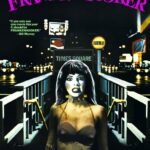
 Horror movies have always had room for strange ideas, but few films have embraced complete insanity with the confidence of Frankenhooker. Released in 1990, this low-budget horror comedy blended classic monster movie inspiration with over-the-top gore, outrageous humor, and satirical commentary in a way that made it impossible to forget. While it was never a mainstream success, the movie steadily built a loyal following among fans who appreciate bizarre cinema that pushes boundaries while never taking itself too seriously.
Directed by Frank Henenlotter, the filmmaker behind the infamous Basket Case trilogy and Brain Damage, Frankenhooker represents everything that made his work unique. It is funny, grotesque, ridiculous, and surprisingly clever beneath its outrageous surface. Rather than attempting to create genuine terror, the film aims for equal parts laughter and disgust, turning one of literature’s most famous horror stories into a gleefully tasteless midnight movie.
More than three decades after its release, Frankenhooker continues to be discovered by new audiences who wonder how such a movie ever got made in the first place.
A Twisted Spin on a Classic Story
The inspiration behind Frankenhooker is obvious from its title alone. Mary Shelley’s Frankenstein serves as the blueprint, but only in the broadest sense. Instead of a scientist obsessed with conquering death through lofty ambitions, the film follows Jeffrey Franken, a shy medical school dropout who becomes determined to resurrect his fiancée after a horrific lawnmower accident leaves her body in pieces.
That setup alone sounds absurd, but the film quickly escalates into pure madness.
Jeffrey realizes he needs replacement body parts and begins searching New York City’s streets for suitable donors. His solution is horrifyingly simple: lure a group of sex workers with promises of free experimental drugs, accidentally blow them up with his homemade “Super Crack,” collect their remaining body parts, and stitch together a new version of his lost love.
The resulting creation is Elizabeth Shelley, rebuilt from multiple women and brought back to life through Jeffrey’s bizarre scientific experiments.
It is simultaneously a parody of Frankenstein, an exploitation film, and a dark comedy that constantly finds new ways to become even more outrageous.
Frank Henenlotter’s Distinctive Style
Frank Henenlotter has never been interested in making polished Hollywood horror films. His movies embrace grime, weirdness, practical effects, and eccentric characters. Much of his work celebrates the sleazy side of New York City during the late 1970s and 1980s, creating stories that feel like comic books brought to life through practical makeup and gallons of fake blood.
Frankenhooker perfectly captures that aesthetic.
Everything feels slightly exaggerated. The dialogue is intentionally ridiculous. The characters behave with complete sincerity despite the increasingly absurd situations surrounding them. This contrast is one of the movie’s greatest strengths. Nobody behaves as though they’re in a comedy, which somehow makes every bizarre moment even funnier.
Henenlotter also understands pacing. The movie moves quickly from one outrageous sequence to another, never lingering long enough for viewers to question its internal logic. Instead, it simply asks audiences to accept the insanity and enjoy the ride.
Patty Mullen’s Memorable Performance
Although James Lorinz plays Jeffrey Franken with nervous energy, the true star of the movie is Patty Mullen as Elizabeth.
For much of the film, she portrays a woman assembled from numerous different personalities. Each transplanted body part seems to retain fragments of its previous owner’s behavior, resulting in Elizabeth constantly shifting between innocence, seduction, aggression, and confusion.
Mullen somehow makes this bizarre concept work.
She delivers one of horror cinema’s strangest performances, balancing physical comedy with an eerie, almost robotic presence. Her exaggerated expressions and unpredictable behavior transform Elizabeth into far more than a typical movie monster.
Perhaps the film’s most famous line—simply shouting “Want a date?” in an unnervingly cheerful voice—became an enduring catchphrase among cult horror fans. It perfectly captures the film’s strange combination of humor and horror.
Practical Effects Steal the Show
Like many cult horror classics from the 1980s and early 1990s, Frankenhooker relies almost entirely on practical effects instead of computer-generated imagery.
The explosions, severed limbs, stitched-together bodies, melting faces, and grotesque transformations were all achieved through makeup, prosthetics, puppetry, and old-fashioned movie magic.
While modern viewers may recognize the artificial nature of many effects, that handmade quality has become part of the movie’s charm.
The exploding body sequences remain especially memorable. Henenlotter stages these scenes with such outrageous excess that they become darkly comedic rather than disturbing. Flying limbs, exaggerated blood sprays, and intentionally unrealistic gore fit perfectly within the film’s cartoonish universe.
Practical effects enthusiasts continue to celebrate Frankenhooker because it showcases the creativity required before digital technology became commonplace.
Satire Beneath the Madness
Despite its outrageous premise, Frankenhooker contains more social commentary than casual viewers might initially notice.
The film pokes fun at society’s obsession with physical perfection and the impossible standards placed on women’s bodies. Jeffrey literally attempts to build the perfect woman by selecting body parts from multiple people, reducing human beings to interchangeable components.
This twisted idea mirrors unrealistic beauty ideals in a grotesque and exaggerated fashion.
The movie also satirizes consumer culture through the fictional drug “Super Crack.” Designed to provide an overwhelmingly powerful high, the substance becomes both a joke about excess and the catalyst for the film’s most outrageous scenes.
Even Jeffrey’s scientific obsession reflects classic cautionary tales about unchecked ambition. His inability to accept loss leads him into increasingly unethical decisions, echoing Victor Frankenstein’s original tragedy while replacing solemn drama with outrageous comedy.
Marketing That Became Legendary
Long before internet memes existed, Frankenhooker became famous through one unforgettable marketing gimmick.
Some video rental stores displayed talking promotional boxes equipped with motion sensors. Whenever someone walked past, the box would suddenly shout, “Want a date?”
The unexpected voice startled countless shoppers and quickly became one of the most memorable home video promotions ever created.
For many people, the talking VHS box became even more famous than the movie itself. Horror fans who grew up browsing rental stores often remember hearing that eerie phrase echoing through the aisles long before they actually watched the film.
It was an inexpensive marketing idea that perfectly matched the movie’s bizarre personality.
A Product of New York’s Exploitation Scene
Frankenhooker belongs to a unique period in New York filmmaking when independent directors created outrageous exploitation movies outside the traditional Hollywood system.
These films often featured tiny budgets, unconventional casts, practical effects, and stories that major studios would never consider producing.
Frank Henenlotter emerged from this creative environment alongside numerous other independent filmmakers who embraced artistic freedom over commercial expectations.
The gritty streets of New York become an important character throughout Frankenhooker. Rather than polished studio sets, audiences see neighborhoods filled with personality and imperfections, giving the movie an authentic urban atmosphere despite its increasingly fantastical plot.
That sense of place helps distinguish the film from countless other horror comedies released around the same time.
Critical Reception and Cult Status
Upon release, critics generally had little idea what to make of Frankenhooker. Many dismissed it as tasteless exploitation designed solely to shock audiences.
Commercially, it struggled to find a wide audience.
However, horror fans viewed the movie differently.
As home video grew throughout the 1990s, Frankenhooker slowly gained recognition among viewers seeking unusual genre films. Word-of-mouth recommendations introduced new audiences to Henenlotter’s unique style, while horror conventions and specialty video stores helped preserve its reputation.
Today, the movie regularly appears on lists celebrating overlooked cult horror classics.
Its willingness to embrace ridiculousness without apology has aged surprisingly well. Modern viewers often appreciate its self-awareness and commitment to practical effects, especially in an era dominated by digital imagery.
Why the Movie Still Works
One reason Frankenhooker continues attracting fans is its complete lack of restraint.
Many horror comedies try to balance scares with humor, often compromising both. Frankenhooker never worries about maintaining realism or emotional credibility. Instead, it throws outrageous ideas at the audience with complete confidence.
That fearless attitude makes the experience surprisingly refreshing.
The film also benefits from a brisk running time of roughly eighty-five minutes. It introduces its absurd premise quickly, delivers one unforgettable scene after another, and ends before the concept wears thin.
Its practical effects remain entertaining because they emphasize creativity over realism. Modern audiences accustomed to flawless computer graphics often find charm in the exaggerated prosthetics and handmade monsters that defined an earlier era of horror filmmaking.
Perhaps most importantly, everyone involved appears fully committed to the material. The cast performs with complete sincerity despite the ridiculous script, allowing viewers to laugh with the movie rather than simply at it.
Legacy in Horror History
Although Frankenhooker never became a blockbuster, its influence within cult horror circles remains undeniable.
The film represents an era when independent filmmakers could produce outrageous concepts without worrying about franchise potential or broad commercial appeal. Its unapologetic weirdness has inspired countless later horror comedies that embrace absurdity as a strength rather than something to hide.
Frank Henenlotter’s body of work continues to receive renewed appreciation from genre enthusiasts, and Frankenhooker often serves as the gateway film for viewers discovering his unique filmmaking style.
Collectors frequently seek out restored Blu-ray editions, while repertory theaters still screen the movie during cult film festivals and midnight movie events. Its reputation has only grown stronger with time, proving that originality often outlasts bigger-budget productions designed for mass appeal.
Watching Frankenhooker today feels like opening a time capsule from a period when horror cinema could be messy, inventive, offensive, hilarious, and completely unpredictable all at once.
It is certainly not a movie for every audience. Its humor is intentionally outrageous, its gore is excessive, and its premise borders on complete insanity. Yet those very qualities explain why it has endured for more than thirty years. Rather than trying to imitate mainstream horror trends, Frankenhooker carved out its own unforgettable identity.
For fans of cult cinema, practical effects, and horror comedies that gleefully ignore every convention, Frankenhooker remains one of the strangest and most entertaining monster movies ever stitched together.